
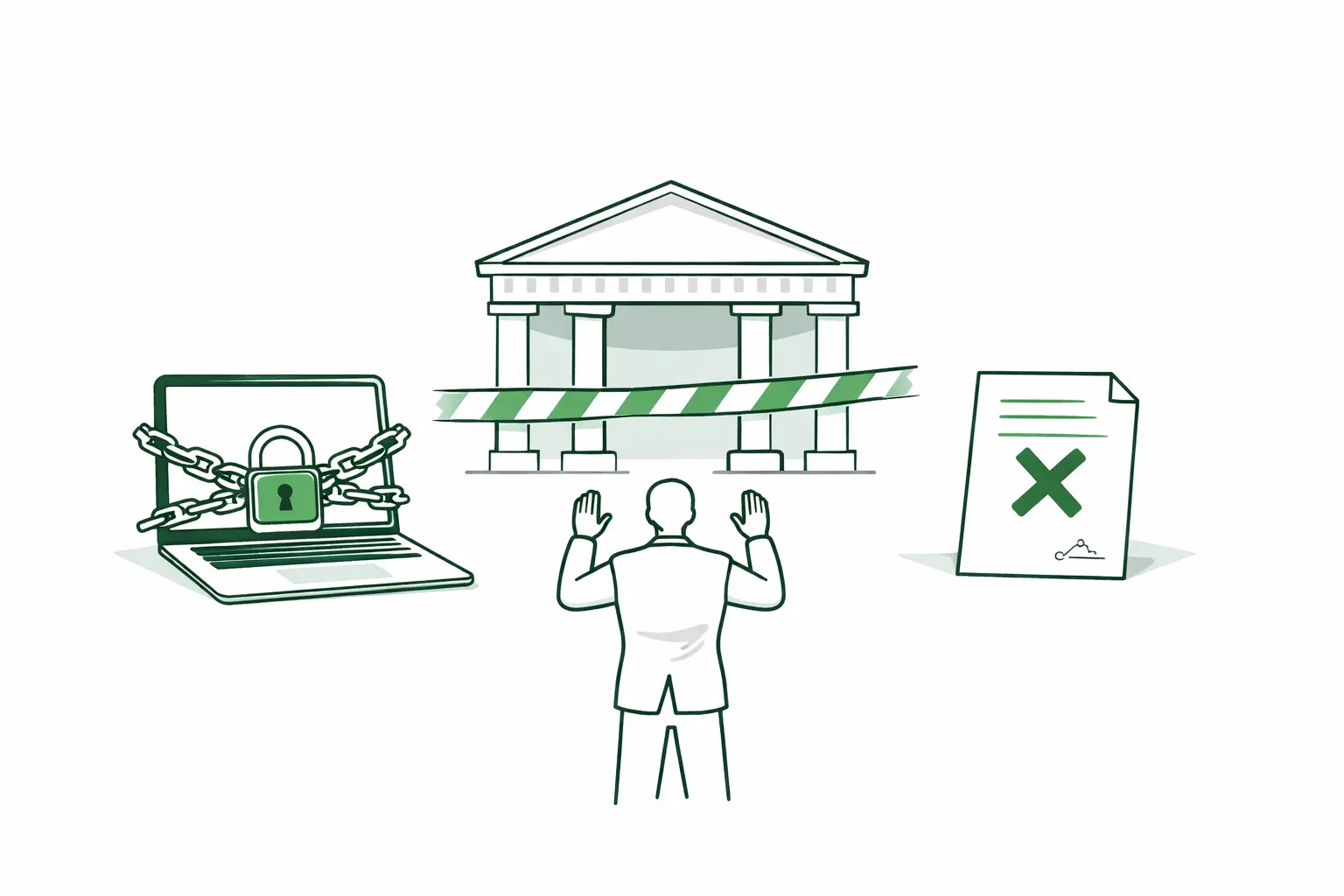
If your business account has ever been frozen, restricted, or closed after a so-called “routine security check”, you’ve already encountered de-risking.
No fraud accusation.
No clear explanation.
No appeal process.
Just a sudden loss of access to your own money.
This situation is becoming increasingly common for businesses operating online, handling cross-border payments, or interacting with crypto platforms. And while it often feels personal, the reality is far more structural.
Understanding why this happens—and how to reduce the risk—starts with knowing how modern banking decisions are made.
What “De-Risking” Really Means for Your Business
De-risking is not a judgment about your integrity or whether your business is legitimate.
It’s a risk management decision made by financial institutions when the perceived compliance cost of serving a client outweighs the benefit of keeping the account open.
This means an account can be closed even when:
All documentation is valid
Transactions are lawful
The business has operated for years without issues
Risk models change. Regulations evolve. Internal thresholds are updated.
When that happens, long-standing accounts can be reassessed—and closed—without warning.
From the bank’s perspective, it’s operational efficiency.
From the business’s perspective, it’s a sudden liquidity crisis.
Why Euro Business Accounts Get Frozen or Closed
Most account closures don’t happen randomly. They follow recurring patterns that trigger internal reviews.
Common factors include:
Exposure to crypto platforms, even if indirect or occasional
High transaction volume or sudden changes in activity
Cross-border payment flows that increase monitoring complexity
Pooled IBAN structures, where multiple clients share the same underlying account
Manual compliance reviews at electronic money institutions (EMIs)
In many cases, the issue is not what your business does—but how easily your activity can be monitored, explained, and segmented within the provider’s infrastructure.
Why “Allowed” Is Not the Same as “Supported”
Many providers advertise themselves as crypto-friendly or business-friendly.
In practice, this often means your activity is tolerated, not structurally supported.
There is a critical difference:
Allowed: Your transactions are accepted until risk thresholds are exceeded
Supported: Your business model is understood, anticipated, and built into compliance processes
When activity is merely “allowed,” reviews tend to be reactive.
When it’s supported, reviews are proactive—and far less disruptive.
This distinction explains why two compliant businesses can experience vastly different outcomes when facing the same regulatory pressure.
How Dedicated IBANs Reduce De-Risking Exposure
One of the most overlooked risk factors is IBAN structure.
With pooled IBANs, multiple businesses operate under the same master account. This makes transaction tracing more complex and increases the likelihood of blanket restrictions when issues arise elsewhere in the pool.
A dedicated IBAN, by contrast, provides:
Clear transaction ownership
Better traceability and auditability
Segregation from unrelated third-party risk
For businesses, this translates into greater operational continuity and fewer surprise interruptions—especially when handling high-volume euro transactions or integrating crypto-related flows.
What a More Resilient Account Setup Looks Like
Reducing de-risking exposure isn’t about avoiding regulation. It’s about choosing infrastructure that matches how your business actually operates.
A more resilient setup typically includes:
A euro business account with a dedicated IBAN
Clear separation between operational funds and crypto-related flows
Structured payment processes, including batch payouts when needed
Transparent compliance expectations aligned with your activity profile
When these elements are in place, reviews become routine—not disruptive.
Stability Is a Choice You Make Upfront
Account freezes and sudden closures are rarely predictable—but they are often preventable.
Businesses that rely on digital payments, cross-border transfers, or crypto exposure need more than basic access to an account. They need payment infrastructure designed for their risk profile.
Choosing the right setup early can mean the difference between uninterrupted operations and days—or weeks—without access to funds.
If account stability matters to your business, it’s worth reviewing whether your current setup is built for long-term resilience.
👉 Talk to an expert about setting up a de-risking-resilient euro account
FAQ
Why do business accounts get closed without explanation?
Business accounts are often closed due to internal risk assessments, not because of wrongdoing. Financial institutions are sometimes restricted from sharing specific reasons due to compliance obligations.
Can a business account be closed even if everything is compliant?
Yes. De-risking decisions are based on perceived risk and operational cost, not solely on compliance status. Fully compliant businesses can still be affected.
Does crypto activity increase the risk of account closure?
Crypto-related transactions can increase monitoring requirements. If a provider’s infrastructure isn’t designed to support such activity, the likelihood of restrictions or closures rises.
How does a dedicated IBAN help reduce account freeze risk?
A dedicated IBAN improves transaction traceability and separates your activity from other clients. This reduces the chance of blanket restrictions triggered by unrelated risk.
What should I look for in a stable euro business account?
Look for a euro account with a dedicated IBAN, clear compliance processes, transparent communication, and infrastructure aligned with your business model.
Open your Monetum account today